
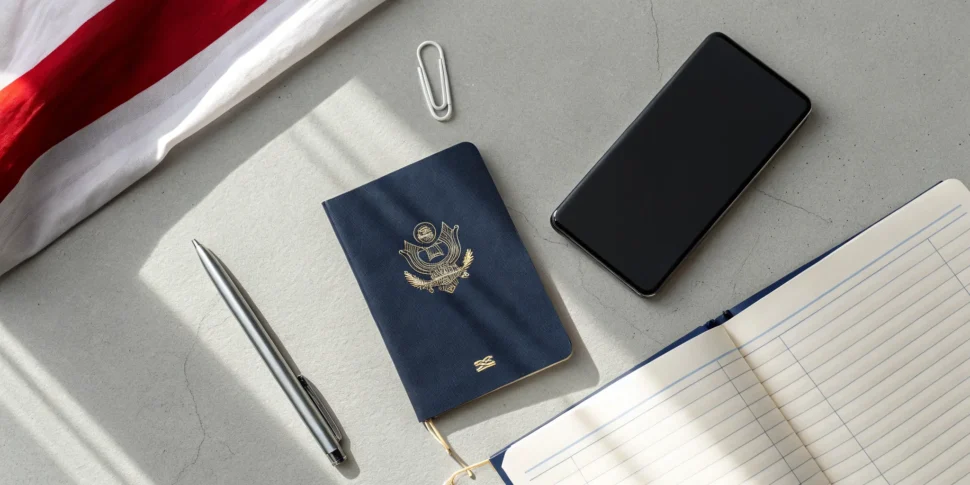
That sinking feeling when you realize your passport is gone is something no one wants to experience, especially with a trip on the horizon. It’s a serious situation, but there’s a clear path forward. Acting quickly is the most important thing you can do to protect your identity and get your travel plans back on track. Your first move should be to report your U.S. passport as lost or stolen to the U.S. Department of State. This immediately invalidates it, preventing fraudulent use. From there, you’ll need to apply for a new one, a process we’ll break down step-by-step.
Key Takeaways
- Check the details to avoid common mistakes: Simple errors, like submitting a low-quality photo or not knowing about the six-month validity rule, can cause major delays. Always confirm your destination’s entry rules and get a professional passport photo to keep your application moving smoothly.
- Your application process depends on your situation: Applying for your first passport or a child’s passport requires an in-person appointment. Most adult renewals can be handled by mail, but only if your current passport is undamaged and meets all eligibility requirements.
- Apply much earlier than you think you need to: Standard passport processing can take several weeks or months, so start the process long before you book a trip. Planning ahead is the best way to avoid the extra fees and stress that come with needing an expedited, last-minute passport.
What Is a U.S. Passport?
Think of a U.S. passport as your official ticket to the world. It’s a government-issued document that confirms your identity and American citizenship. You’ll need a U.S. passport to travel to most countries, making it one of the most important documents you can own. Whether you’re planning a vacation, a business trip, or studying abroad, this little blue book is your key to crossing international borders.
But it’s not just for getting stamped at customs. Your passport is a powerful tool with different forms and specific rules you need to understand before you pack your bags. From the type of passport you need to how long it must be valid, getting the details right from the start saves you from major headaches later. Let’s break down what you need to know about this essential travel companion.
Why It’s More Than Just a Travel Document
Beyond being your entry pass to other countries, a U.S. passport is a primary form of identification and solid proof of your citizenship. You’ll find there are two types: the passport book and the passport card. The book is what most people picture, allowing for international travel by air, sea, or land. The passport card, however, is a wallet-sized alternative for land and sea travel to Canada, Mexico, the Caribbean, and Bermuda. It’s convenient for frequent border crossers but can’t be used for international flights. Understanding which one fits your travel style is the first step in getting the right passport services.
The Six-Month Validity Rule Explained
Here’s a travel rule that catches many people by surprise: the six-month validity rule. Many countries will not let you enter if your passport expires in less than six months from your planned departure date from their country. For example, if you plan to leave Italy on June 1, your passport must be valid until at least December 1 of that same year. This regulation is in place to ensure you don’t get stranded abroad with an expired document. Always check your destination’s specific entry requirements and your passport’s expiration date long before you book your flight. If you’re cutting it close, it’s time to renew.
Passport Book vs. Passport Card: What’s the Difference?
When you apply for a U.S. passport, you have two options: a passport book or a passport card. While both prove your identity and citizenship, they aren’t interchangeable. Understanding the difference is key to making sure you have the right document for your travel plans. Let’s break down what each one does so you can choose with confidence.
The Passport Book: For International Air Travel
The passport book is the classic blue booklet that gets stamped at customs. This is your ticket to the world, as it’s required for all international air travel, no matter the destination. A passport book is also valid for re-entry into the United States by land or sea from anywhere. For adults, it’s valid for 10 years, and for children under 16, it lasts for five years. If you have any plans to fly outside of the U.S., this is the document you need. Getting your first book or renewing an old one is a straightforward process, and our passport services are designed to handle all the details for you.
The Passport Card: For Land and Sea Crossings
The passport card is a wallet-sized, more affordable alternative to the book. It’s designed for U.S. citizens who frequently travel by land or sea to Canada, Mexico, the Caribbean, and Bermuda. It’s a convenient option for road trips across the border or for closed-loop cruises that start and end in the U.S. The most important thing to remember is that a passport card cannot be used for international air travel. If you’re a frequent border-crosser, you might also find that pairing your card with a program like Global Entry can make your trips even smoother.
How to Choose the Right One for Your Trip
So, which one should you get? The decision comes down to one simple question: Do you plan to fly internationally? If the answer is yes, or even maybe, you need a passport book. It’s the only document that allows you to board a flight to another country. If you are certain your travels will be limited to land or sea crossings into Canada, Mexico, the Caribbean, or Bermuda, the passport card is a great, budget-friendly choice. For maximum flexibility, the passport book is always the best bet. You can even hold both a book and a card at the same time.
How to Get Your First U.S. Passport
Getting your first U.S. passport is an exciting milestone that opens up a world of travel. The process is more involved than a simple renewal because it requires you to apply in person, but don’t worry, it’s a straightforward path. We’ll walk you through every step, from gathering your documents to tracking your application, so you can feel confident and prepared. Think of this as your friendly checklist to getting that little blue book in your hands.
Step 1: Check Your Eligibility
First things first, you need to be a U.S. citizen to get a U.S. passport. This is the main requirement. You are considered a U.S. citizen if you were born in the United States or certain U.S. territories, if you were born abroad to U.S. citizen parents, or if you have become a naturalized citizen. If you meet this condition, you’re ready to move on to the next step. The entire process is designed to verify your citizenship and identity before issuing a travel document, which is why the following steps are so important.
Step 2: Gather Your Documents
Now it’s time to collect your paperwork. You will need a few key items to prove you are who you say you are. This includes original proof of U.S. citizenship (like a birth certificate or Certificate of Naturalization), a valid government-issued photo ID (such as a driver’s license), and one 2×2 inch color photograph. Your passport photo must meet very specific requirements, so it’s often best to have it taken professionally to avoid application delays. Having all your documents in order is the best way to ensure a smooth application process. If you need help ensuring everything is correct, our passport services can manage every detail for you.
Step 3: Fill Out Form DS-11
The official application for a new passport is Form DS-11. You can fill this out online and print it, or print a blank copy and complete it by hand using black ink. Be careful to provide accurate information and write clearly. One very important tip: do not sign the form until you are instructed to do so by an acceptance agent during your in-person appointment. Signing it ahead of time will invalidate the form, and you’ll have to start over. This is a common mistake, so just remember to wait until you’re at your official appointment.
Step 4: Apply in Person
Unlike renewals, all first-time passport applications must be submitted in person at a designated passport acceptance facility. These are often located at post offices, public libraries, or local government offices. You’ll need to bring your unsigned Form DS-11, proof of citizenship, photo ID, passport photo, and a form of payment for the fees. At the facility, an acceptance agent will review your documents, witness you signing the DS-11, and officially accept your application for processing. This in-person step is a critical security measure to verify your identity.
Step 5: Pay the Fees and Track Your Status
When you apply, you’ll need to pay two separate fees: an application fee and an acceptance fee. The application fee is paid to the U.S. Department of State, while the acceptance fee is paid directly to the facility where you apply. Be sure to check what forms of payment are accepted at your chosen location, as some may not take credit cards. After you’ve submitted everything, you can track your application status online. This allows you to see where your application is in the process, giving you peace of mind while you wait for your new passport to arrive in the mail.
How to Renew Your U.S. Passport
If your passport is nearing its expiration date, it’s time to think about renewal. The process is generally more straightforward than applying for the first time, but it comes with its own set of rules. The biggest difference is that most renewals are handled by mail, not in person. It’s important to get the details right to avoid any hitches that could delay your travel plans.
Before you start, take a moment to check the expiration date on your passport. Some countries require your passport to be valid for at least six months after your trip ends, so it’s wise to renew well in advance. If you’re feeling overwhelmed by the requirements or are on a tight schedule, working with a professional can make all the difference. Our team handles passport services every day and can manage the entire process for you, ensuring everything is accurate and submitted on time.
Can You Renew by Mail?
For most adults, renewing a passport is something you must do by mail. You can’t just walk into a post office and renew in person. To be eligible for mail-in renewal, you have to meet a few key requirements. Your current passport must be in your possession and undamaged. It also needs to have been issued within the last 15 years, when you were age 16 or older.
Finally, the passport must be in your current name. If your name has changed, you can still renew by mail, but you’ll need to include legal documentation (like a marriage certificate or court order) proving the change. If your passport was lost, stolen, or significantly damaged, you won’t be able to renew it and will need to apply for a new one instead.
Renewing by Mail: A Step-by-Step Guide
Once you’ve confirmed you can renew by mail, the process is simple. First, gather your documents. You’ll need to complete the application Form DS-82, which you can find on the State Department website. Be careful not to sign it until you are instructed to do so. Along with the form, you’ll need your most recent passport, a new passport photo that meets all requirements, and the renewal fees.
Give yourself plenty of time, as processing can take several weeks or even months. You can check the most current processing times online before you send everything in. After you’ve mailed your application, you can keep an eye on its progress using the State Department’s Online Passport Status System.
Renewing a Child’s Passport: What Parents Should Know
Here’s a critical point for parents: you cannot renew a child’s passport. Passports issued to children under the age of 16 are only valid for five years and are not eligible for renewal by mail. When your child’s passport expires, you must apply for a brand new one in person, just like you did the first time.
This means you and your child will need to go to a passport acceptance facility. Both parents or legal guardians typically need to attend the appointment to provide consent. You’ll also need to bring proof of your child’s U.S. citizenship (like their original birth certificate) and evidence of your parental relationship. It’s a more involved process, so be sure to plan ahead.
Breaking Down Passport Costs
Understanding the costs associated with getting a passport can feel a bit confusing, but I’m here to clear it up for you. The total price depends on a few factors: whether you’re applying for the first time, renewing an existing passport, and how quickly you need it. These government-mandated fees are standard for everyone, but it’s helpful to see them laid out so you know exactly what to expect before you start the process.
Keep in mind that these are just the direct costs paid to the government. When you’re short on time or simply want to ensure everything is done perfectly, using a dedicated service can be a lifesaver. Our team at Justin Document specializes in managing the entire passport application process, making sure every detail is handled correctly so you can focus on planning your trip. Let’s break down what you’ll need to pay.
Fees for a New Passport
If you’re getting a passport for the very first time, you’ll have two separate fees to pay: an application fee and an acceptance fee. The application fee goes to the U.S. Department of State, while the acceptance fee is paid directly to the facility that takes your application (like a post office or county clerk’s office).
For adults, a new passport book costs $165 ($130 application fee plus a $35 acceptance fee). If you only need a passport card for land and sea travel to certain areas, the total is $65 ($30 application fee plus a $35 acceptance fee). For minors under 16, a passport book is $135 ($100 plus $35), and a card is $50 ($15 plus $35).
Fees for a Renewal
Renewing your passport is a bit more straightforward and slightly less expensive because you don’t have to pay the acceptance fee again. As long as you meet the criteria to renew by mail, you’ll only need to cover the application fee.
The cost to renew an adult passport book is $130. If you’re just renewing a passport card, the fee is $30. This streamlined process is one of the perks of keeping your passport up to date. Just be sure your previous passport isn’t significantly damaged and was issued within the last 15 years when you were at least 16 years old.
Fees for Expedited Service
What if your trip is just around the corner? The government offers an expedited service to speed up processing times. This is a great option if you can’t wait for the standard routine service, which can often take several weeks or even months.
To have the Department of State expedite your application, you’ll pay an additional $60 on top of the regular application fees. This fee applies whether you’re getting a new passport or renewing an old one. When every day counts, this extra cost can provide valuable peace of mind. For even faster turnarounds, courier services like ours can help secure your passport on a much tighter deadline.
How Long Does It Take to Get a Passport?
One of the first questions on everyone’s mind is, “How long will this take?” The answer really depends on which processing speed you choose and how accurate your application is. Government processing times can change depending on the season, so it’s always a good idea to apply for your passport long before you have any international travel plans on the calendar.
Keep in mind that the official processing time starts the day your application is received, not the day you mail it. It also doesn’t include mailing times, which can easily add a week or two on both ends of the process. Understanding the difference between routine and expedited service will help you choose the right path and set realistic expectations for getting that little blue book in your hands.
Routine vs. Expedited Timelines
Routine processing is the standard, most affordable option. This timeline usually takes several weeks and is a great choice if you don’t have an international trip coming up anytime soon. If you need your passport faster, you can choose expedited service. This requires an additional government fee but significantly shortens the processing window, making it ideal for travelers with a deadline.
Because these timelines can fluctuate, it’s best to check the U.S. Department of State website for the most current processing times. For true life-or-death emergencies, you may be able to get an appointment at a passport agency, but these are reserved for very specific, urgent situations.
How to Avoid Common Processing Delays
The timelines provided by the government assume your application is perfect. Unfortunately, even a small mistake can suspend your application and cause major delays that put your travel plans in jeopardy. The best way to keep things moving is to submit a flawless application from the very beginning. Taking a few extra minutes to double-check every detail is well worth the effort.
Some of the most common errors include submitting a poor-quality photo, forgetting to include essential documents like your original birth certificate, or making simple spelling mistakes on the form. Ensuring everything is correct is the single best thing you can do to prevent a delay. Our passport services are designed to catch these issues before they become a problem, giving you peace of mind that your application is complete and accurate.
Common Passport Mistakes (and How to Avoid Them)
Applying for a passport can feel like a final exam you didn’t study for. It’s surprisingly easy to get tripped up by the details, and a simple mistake can cause significant delays that put your travel plans in jeopardy. In fact, about one in five passport applications are held up because of errors, ranging from a bad photo to a forgotten signature. When you have a trip on the line, the last thing you want is a letter from the State Department putting your application on hold, especially when you thought you did everything right.
Let’s walk through some of the most common slip-ups I’ve seen over my ten years of helping travelers. Knowing what to look out for is the best way to get your application approved without a hitch. Think of this as your cheat sheet for a smooth and stress-free process. Of course, if you’d rather not deal with the paperwork at all, our team can manage your passport services from start to finish. We’ll make sure every detail is correct before submission, so you can focus on planning your trip instead of worrying about government forms.
Getting Your Passport Photo Wrong
Your passport photo isn’t just a headshot; it’s a piece of biometric data with very strict rules. The government will reject your application if your photo doesn’t meet the requirements. Common mistakes include smiling, wearing glasses (which are no longer allowed), using a filtered photo, or having a background that isn’t pure white or off-white. Even a small printing error or shadow can get your photo flagged.
To avoid this, I always recommend getting your photo taken by a professional service that understands the official guidelines. It might cost a few extra dollars, but it saves you the headache of a rejected application and potential travel delays. Don’t risk a selfie; it’s just not worth it.
Forgetting Key Documents
Imagine waiting weeks for your passport, only to find out your application is stalled because you forgot a crucial document. It’s a frustratingly common scenario. For a new passport, you’ll need original proof of U.S. citizenship (like a birth certificate) and a valid government-issued photo ID, plus photocopies of both. For a renewal, the requirements are different.
Before you go to your appointment or mail your forms, create a checklist and tick off every single item. Double-check that you have both the original documents and the required copies. Making sure you have all the correct paperwork is the single most important step to prevent your application from being put on hold.
Signing in the Wrong Spot
This mistake is so simple, yet it happens all the time. If you are applying for a new passport using Form DS-11, do not sign the application until you are in front of a passport acceptance agent. The agent needs to witness your signature to verify your identity. If you sign it ahead of time, the form is invalid, and you’ll have to fill out a new one.
On the other hand, if you are renewing your passport by mail with Form DS-82, you do need to sign and date it before you send it in. Confusing these two is a classic mix-up that can easily be avoided by reading the instructions on your form carefully.
Misjudging Processing Times
Many travelers don’t realize how long it takes to get a passport, and they cut it way too close. Even if you pay for expedited service, it can still take several weeks. On top of that, many countries enforce the “six-month validity rule,” meaning they won’t let you enter if your passport expires within six months of your planned departure date from their country.
To be safe, you should start the application process for a new or renewed passport at least eight months before your trip. This gives you a comfortable buffer for processing and helps you meet any visa services deadlines. Rushing at the last minute adds unnecessary stress and can put your entire trip at risk.
Lost or Stolen Passport? Here’s What to Do
That sinking feeling when you realize your passport is gone is something no one wants to experience, especially with a trip on the horizon. It’s a serious situation, but there’s a clear path forward. Acting quickly is the most important thing you can do to protect your identity and get your travel plans back on track. Don’t panic; just follow these steps to handle the situation.
Step 1: Report It Missing Immediately
Your first move should be to report your passport as lost or stolen to the U.S. Department of State. This is a critical step because it immediately invalidates the passport, which helps prevent anyone from using it for fraudulent purposes or identity theft. You can report your passport missing online or by phone. Once you report it, it’s permanently voided and cannot be used for travel, even if you find it later. This action protects you and is the official start to getting your travel documents in order again.
Step 2: Apply for a Replacement
Unfortunately, you can’t just get a duplicate of your old passport. You’ll need to apply for a completely new one. This process is similar to applying for a first-time passport, which means you’ll have to fill out the correct forms, provide proof of citizenship, and submit a new photo. Because this can feel overwhelming, especially when you’re already stressed, using a service can simplify everything. Our team can manage your application for a new passport, ensuring all your documents are correct and submitted properly to avoid any delays. We handle the details so you can focus on your upcoming plans.
What If You Have a Trip Booked?
If your passport disappears right before an international trip, you might be eligible for an expedited or emergency passport. Depending on your travel dates, the State Department can issue a limited-validity emergency passport very quickly. However, this process requires proof of immediate travel and a visit to a passport agency or center, which can be difficult to schedule on short notice. When time is critical, letting an expert handle the logistics is your best bet. We specialize in securing passport services on tight deadlines, giving you the best possible chance of making your trip without a hitch.
Need Help With Your Passport?
Getting your passport shouldn’t feel like a high-stakes test, but with so many details to get right, it can be surprisingly stressful. From filling out the correct forms to submitting a perfect photo, a single slip-up can cause major delays for your travel plans. In fact, simple passport application mistakes are quite common, holding up about one out of every five applications. If your trip is just around the corner, a delay is the last thing you need.
That’s where getting a little help comes in. Whether you’re applying for the first time, renewing an expired passport, or changing your name, having an expert on your side can make all the difference. We manage the entire process for you, ensuring every detail is correct so you can focus on the exciting parts of your trip. Our passport services are designed to give you peace of mind and get your passport in your hands, hassle-free.
Your Partner for New Passports, Renewals, and More
The passport application process is full of potential hiccups. It’s easy to grab the wrong form, forget a signature, or submit a photo that doesn’t meet the strict government requirements. Even tiny data or printing errors can lead to your application being rejected, putting your travel plans at risk. If you’ve lost your passport or it’s been stolen or badly damaged, you typically can’t just renew it; you’ll have to apply for a brand new one, which adds another layer of complexity. An expert partner ensures these common but costly passport errors don’t happen to you.
When to Let an Expert Handle It
Deciding to use a passport service is a smart move if you’re feeling rushed, overwhelmed by the paperwork, or simply don’t want to risk a mistake. It’s especially helpful for complex situations, like securing a last-minute passport for an emergency trip or replacing one that was lost while traveling. Think of it as an insurance policy for your travel plans. Instead of spending hours double-checking forms and worrying about timelines, you can hand off the entire task to a professional who handles these applications every single day. This frees you up to deal with everything else on your pre-travel to-do list.
Frequently Asked Questions
How long does my passport need to be valid to travel internationally? Many countries require your passport to be valid for at least six months beyond your planned departure date from their country, not your arrival date. This is a common rule that catches many travelers off guard. Before booking any travel, you should always check the specific entry requirements for your destination and look at your passport’s expiration date. If you’re within a year of expiration, it’s a good idea to start the renewal process.
My child’s passport is expiring. Can I just renew it by mail? No, you cannot renew a passport for a child under the age of 16. Passports issued to minors are only valid for five years and are not eligible for mail-in renewal. You must apply for a new passport in person with your child. This process requires you to provide consent, proof of your parental relationship, and your child’s proof of citizenship, just like you did for their first passport.
What happens if I make a mistake on my application? If your application has an error, the U.S. Department of State will put it on hold and send you a letter explaining the problem. This will cause significant delays in processing, which can put your travel plans at risk. Depending on the mistake, you may need to provide additional information or even start the entire application process over again. This is why it’s so important to double-check every detail before you submit.
I changed my name. Do I need to get a whole new passport? It depends. If your current passport is less than a year old, you can get it updated for free. If it’s older but still valid, you can typically renew it by mail using Form DS-82, but you must include an original or certified copy of your legal name change document, like a marriage certificate or court order. If your passport has already expired, you will follow the standard renewal process and include your name change document.
Should I get a passport book, a card, or both? The choice comes down to how you plan to travel. If you intend to fly to any international destination, you must have a passport book. The passport card is a wallet-sized alternative that is only valid for land and sea travel to Canada, Mexico, the Caribbean, and Bermuda. It cannot be used for international air travel. If you are a frequent international flyer, the book is essential. If you often drive across the border, the card is a convenient and affordable option.